
01CarbonBlaze explainer
What forest conservation and carbon credits is about
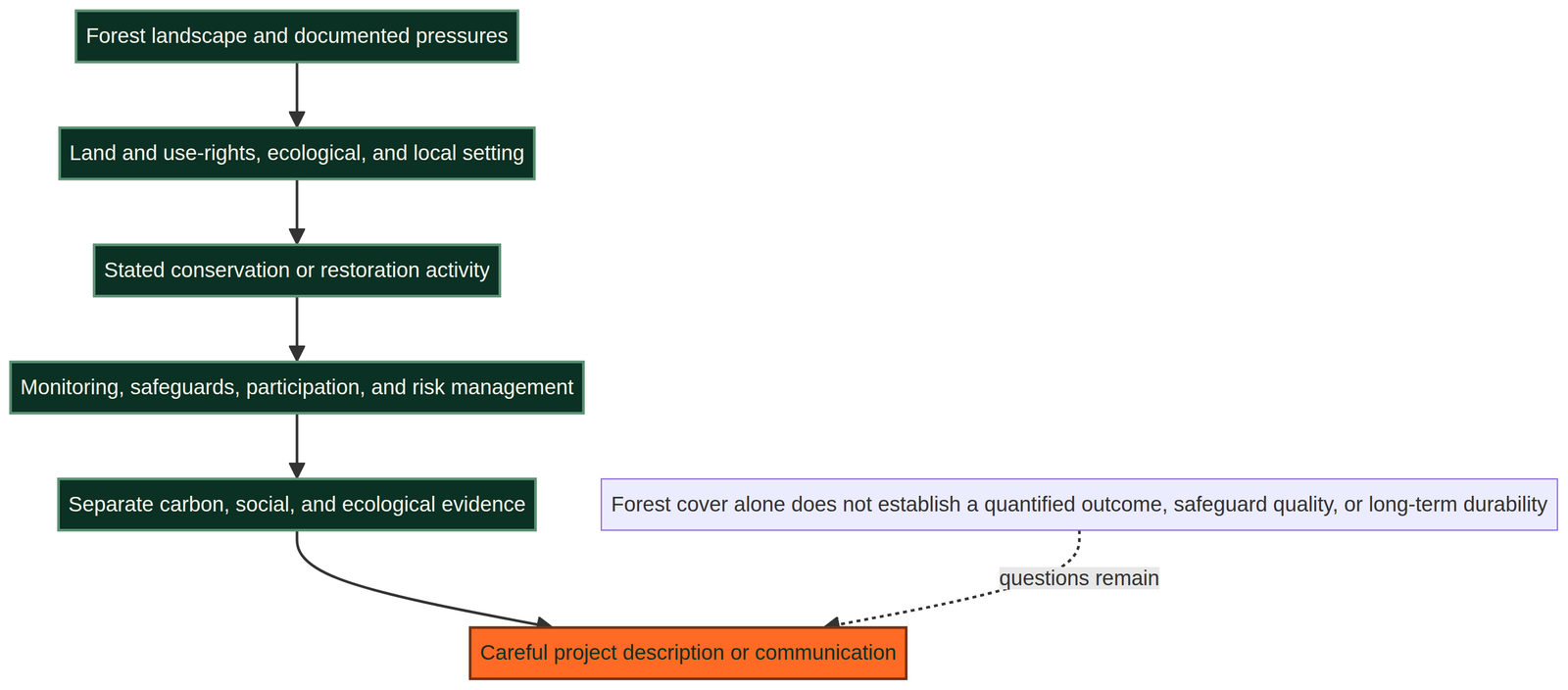
Forest-conservation activities may seek to address a stated risk of forest loss or degradation. The evidence questions can include the reference scenario, drivers of land-use change, ecological condition, land and carbon rights, community participation, monitoring, and risk management.
02CarbonBlaze explainer
What the label cannot settle on its own
Forest cover alone does not demonstrate an estimated carbon outcome, biodiversity result, safeguard quality, or long-term durability. Forest-related pathways can face leakage and reversal risks and need landscape-specific evidence.
03CarbonBlaze explainer
Questions that keep the evidence trail open
What pressures on the forest are documented? What baseline and monitoring method are used? How are local rights and benefit-sharing described? How are fire, leakage, and long-term management addressed?
Common questions
Does this guide rate a credit or project?
No. It explains the topic and suggests questions; quality and claim conclusions require project-specific evidence and appropriate review.
Is this legal, financial, tax, or procurement advice?
No. CarbonBlaze provides general educational material. Decisions should use applicable rules, primary sources, and qualified advice where needed.