
Step / 01
Choose your tonnes
Pick the amount that fits your household, team, event, or organization. The server calculates the final ₹218-per-tonne quote.
About 1 minute
Manual certificate fulfilment · India
Choose your tonnes, pay securely through Razorpay, and receive a CarbonBlaze fulfilment confirmation by email. We manually arrange the provider certificate within 24 hours of payment confirmation.
Sample layout · CarbonBlaze
Beneficiary
Your name
Quantity
1 tonne
Provider and registry evidence is added after manual fulfilment.
Certificate record
Public evidence trail
Field file · 01 · The process
No account, wallet, or blockchain knowledge is required to start a request. The browser never decides whether payment succeeded; Razorpay’s signed server notification does.
Step / 01
Pick the amount that fits your household, team, event, or organization. The server calculates the final ₹218-per-tonne quote.
About 1 minute
Step / 02
Enter your certificate details and continue through Razorpay. UPI, cards, and other supported methods appear in its secure Checkout.
About 2 minutes
Step / 03
After payment confirmation, CarbonBlaze manually fulfils the request and emails the provider certificate or available evidence within 24 hours.
Within 24 hours
Field file · 02 · The proof
The certificate request captures your name, tonnes, beneficiary, and optional message. Final provider and registry evidence is supplied after manual fulfilment; a payment alone is not represented as a completed retirement.
Read the source-linked offset guideYour name, beneficiary, tonnes, and message are carried into the fulfilment request.
We provide the final provider certificate and available public record only after the retirement work is completed.
Learn how registries, providers, methodologies, and blockchain records fit together.
Customers pay in rupees. CarbonBlaze does not ask the customer for a wallet or private key.
Field file · 03 · The price
₹100 carbon amount per tonne + ₹100 administration fee per tonne + 18% GST on the administration fee. That is ₹218 per tonne, shown before you pay.
The browser may display a quote, but the server creates and protects the Razorpay order amount. Any final evidence is sent after manual fulfilment.
Learn before you buy
Explore the CarbonBlaze learning hub for carbon credits, registries, project evidence, biodiversity, forest restoration, and climate claims. Read the source trail and decide what questions matter for your situation.
02Canopy signals
Begin with a question, then choose the kind of evidence you need. The Atlas is designed for discovery and learning, not rankings or a forced checkout.
02Find your next question
Choose the context, question, and type of help that fits. CarbonBlaze will suggest an educational route, source trail, or voluntary conversation—not a calculation, project recommendation, or transaction.
Your selected route
Estimate selected activity context
This route offers education and source context; it does not recommend a credit or make a claim for you.
Continue01Start here
You do not need to choose a credit, understand blockchain infrastructure, or make a claim before you can begin learning.
Start with a journey, personal activity, or nature-related question rather than a generic climate promise.
Explore the pathway 02Use the local guides to understand credit quality, records, project context, and careful claims.
Read the guide 03Send the question you have. CarbonBlaze can explain the available pathway and its visible moving parts.
Contact the teamCarbonBlaze Field Guide
Original routes for different readers. Each path explains the basics, identifies the limits of the evidence, and links to primary sources for the current detail.
For people
Learn what a footprint estimate can mean, how to separate reduction from credit use, and what records to look for.
Open this routeFor organizations
Follow the route from organizational boundaries and Scope 1–3 to careful claims, evidence, and public communication.
Open this routeFor public institutions
Explore Article 6, procurement questions, public transparency, safeguards, and the primary sources behind them.
Open this routeThe work behind the work
The Atlas connects market and climate resources with a wider question: how do restoration, biodiversity, and durable carbon removal show up in the standards, evidence, and decisions people rely on?
Find restoration and biodiversity sources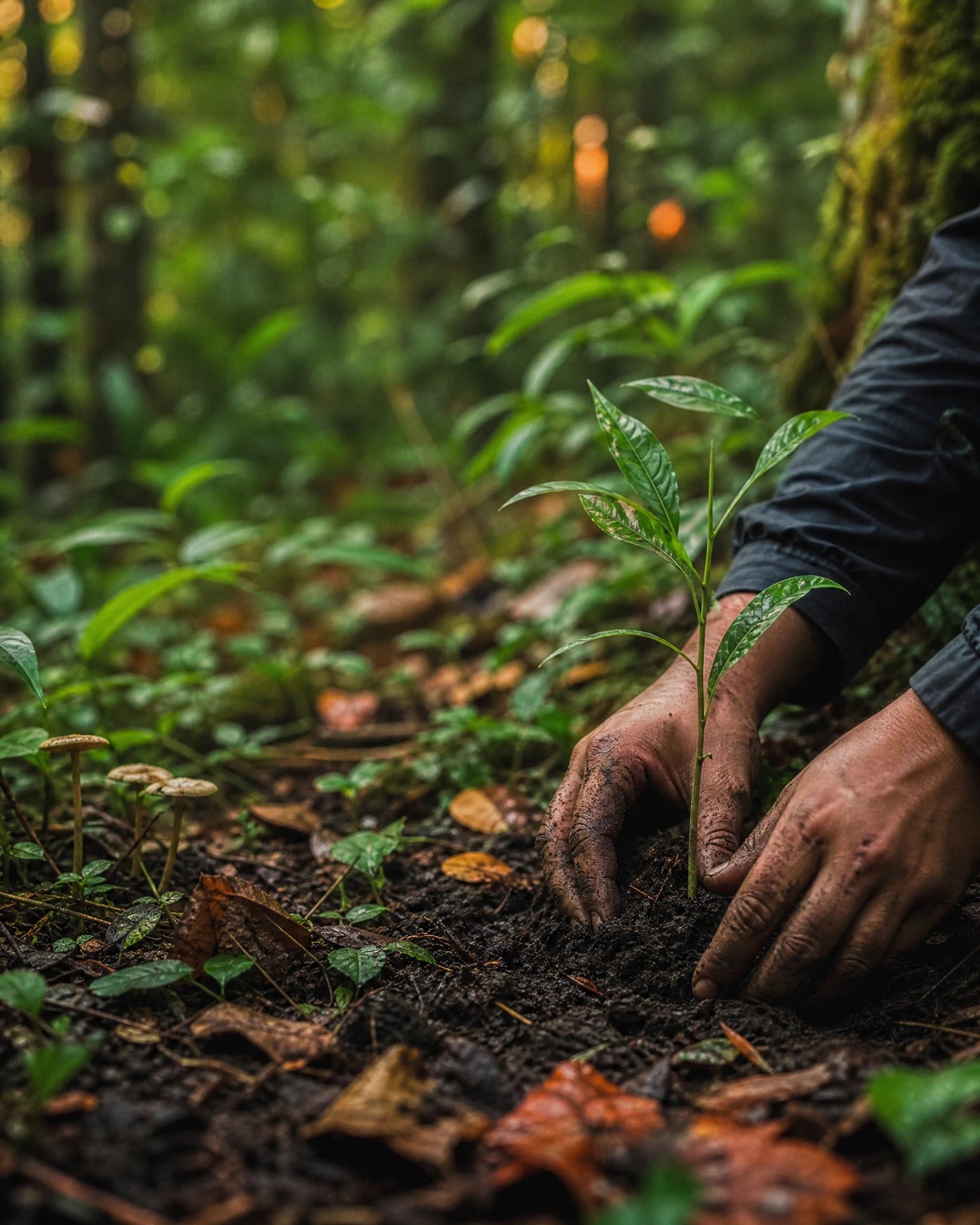
A wider lens
Forests are more than a line item. They are habitat, watersheds, livelihoods, and complex living systems.
Explore original sources to understand the frameworks and questions around natural climate solutions—without treating any single link as a substitute for due diligence.
Start your exploration
Featured source records
Highlighted for discovery—not as a ranking, certification, or endorsement. Each record links to the organization that publishes the underlying material.
Daily Dispatch
CarbonBlaze Carbon Atlas Desk · An independent research directory. External sources remain responsible for their own content.